

Apeiron
MY WORK
Apeiron is an open-world action RPG concept developed in Unreal Engine.
As Lead Designer and Director, I was responsible for the game's overall vision, system design, production planning, and implementation of core gameplay systems. My work focused primarily on combat, companion AI, progression systems, traversal mechanics, and cross-disciplinary coordination between design, programming, and art.
PROBLEM #1: VISUAL CLUTTER
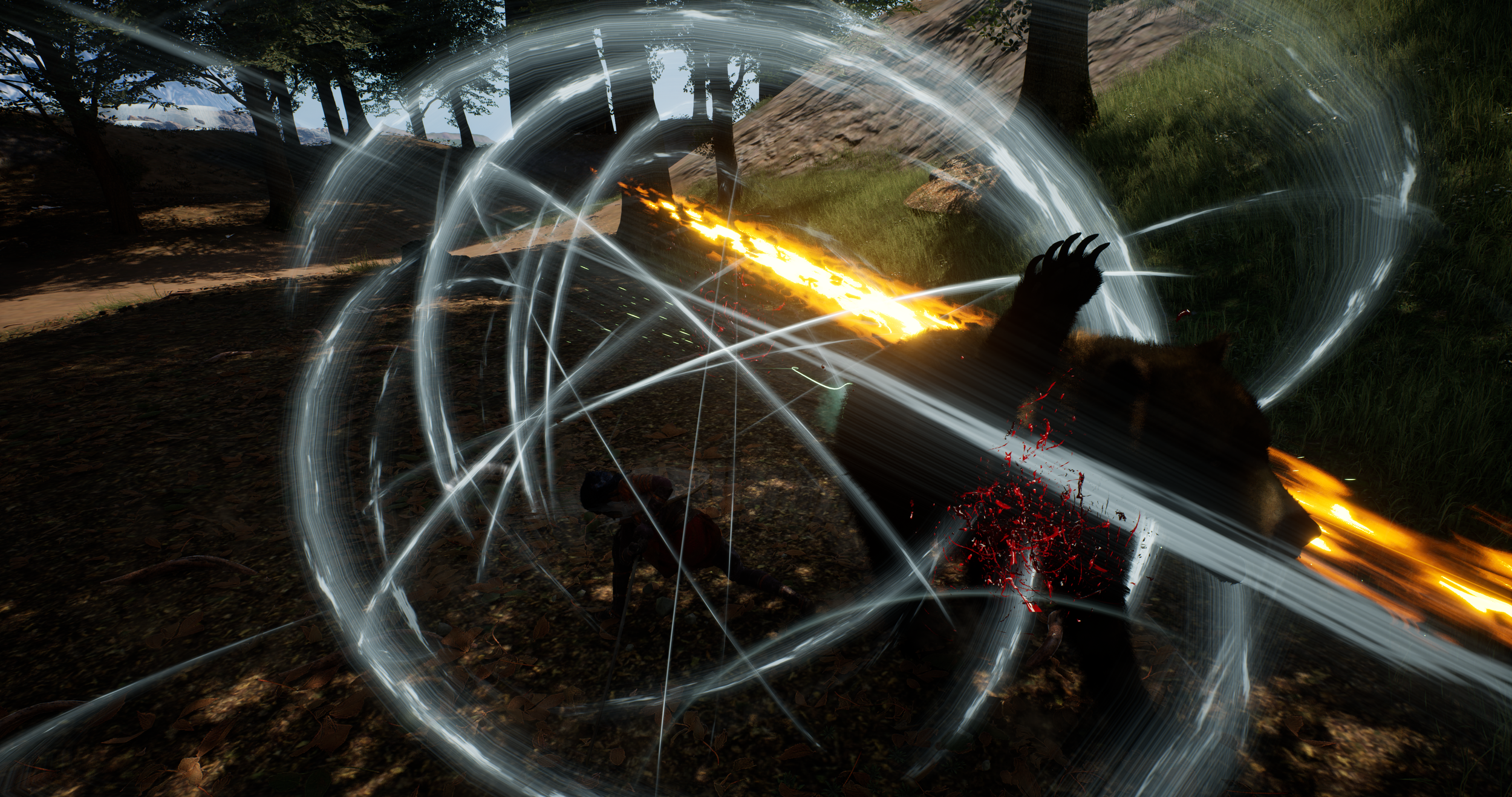
As you can see in the image, too much on the screen can be problematic in terms of clarity and readability for the player, especially beginners.
With four active characters, enemy groups, attack indicators, projectiles, and skill effects on screen simultaneously, maintaining combat readability became a major design challenge.
I solved it with the following:
Limited the skills a companion could use when not controlled by the player to only Light Attacks (we call them Basic Attacks internally). In addition to that, I expanded upon a colleague’s idea (the Follow-Up System, see below) that would allow companions to use more visually appealing skills in a controlled way and give players a feeling of cooperation between them and their companions.
Reduced saturation of attack indicators (red marks on the ground) and projectiles.
Enemies in large groups often distribute themselves to evenly target companions in the player party (with a few exceptions that are meant to swarm a single unit by design).
Integrated off-screen indicators for enemies.
PROBLEM #2: AI USEFULNESS and player agency
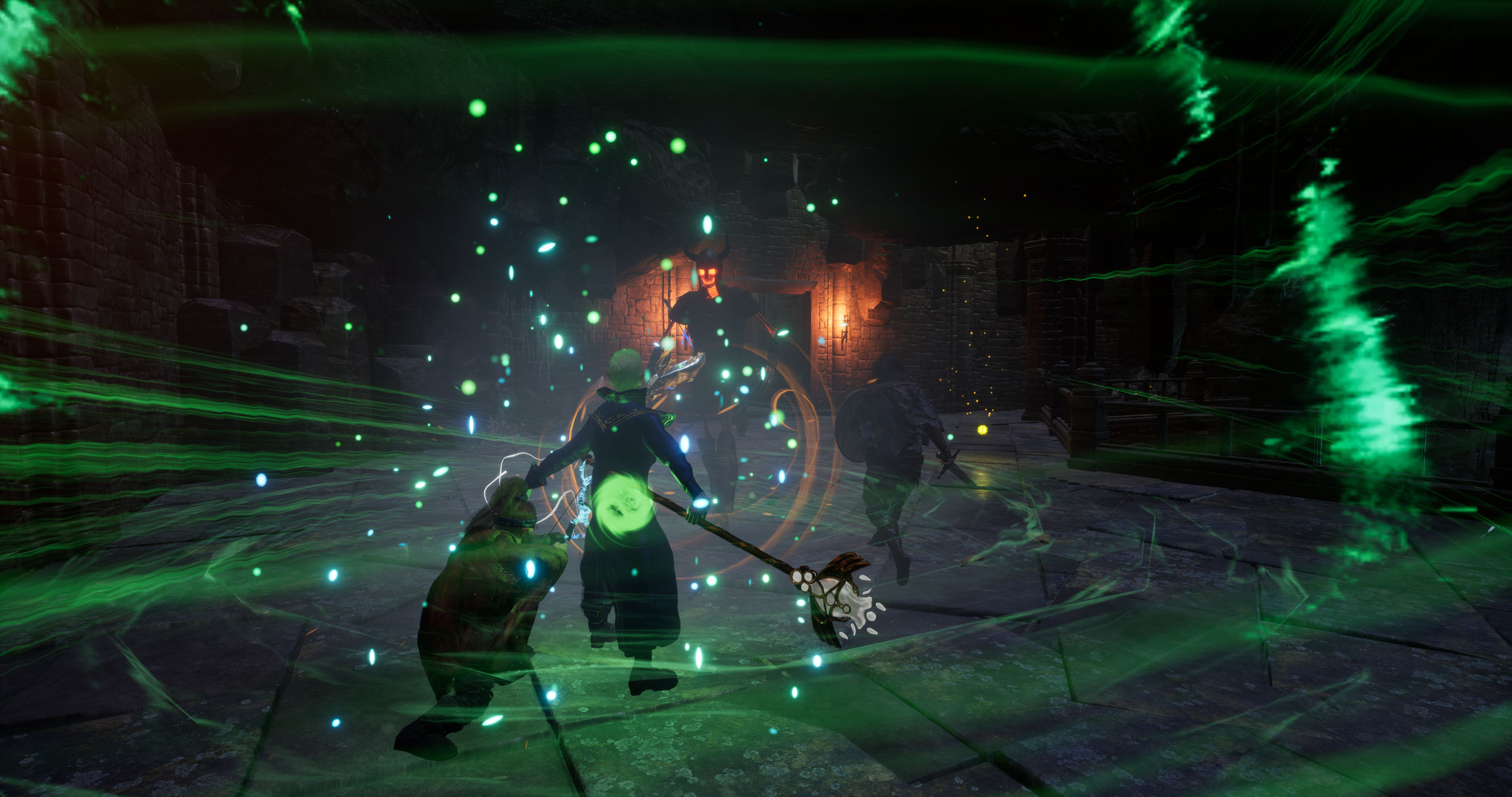
We wanted to ensure companions felt both useful and vulnerable, while still making sure that the player was the deciding factor in battle without companions coming across as a nuisance.
Companions can block/avoid enemy attacks that they “see” coming, but get overwhelmed easily if being attacked from multiple directions. This makes it so they are not invincible and the use of healing is still necessary, but they are not so weak as to be a nuisance.
Companions only engage in combat when the player hits the first enemy.
Follow-Up System:
When an enemy is hit with a skill that causes Knock Up, one of their companions uses a Skill against that enemy (or group of enemies).
Stronger opponents prioritize the player much more often than they go after companions. Not only does this make the player the primary focus, it also incites them to choose controlling the best companion against the type of enemy they are currently facing.
PROBLEM EXAMPLE #3: PROGRESSION AND VARIETY
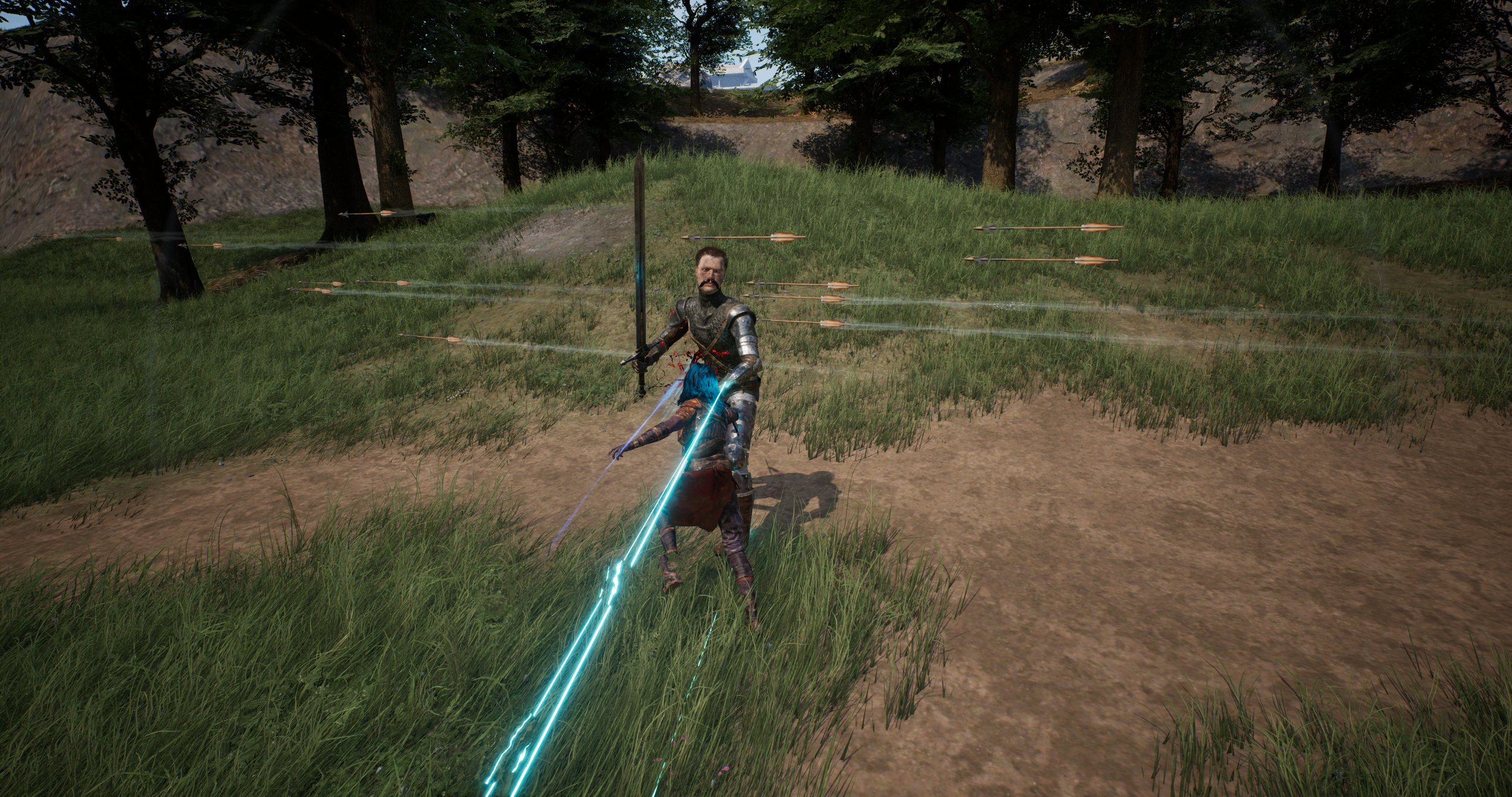
I wanted two major progression systems in the game: One that provided a sense of continuous power increase and another that incited variety throughout each campaign. For the latter, the challenge was encouraging experimentation without constantly invalidating player investment. That is why I came up with the Artifacts system.
Each weapon has three Rune Slots. Filling up all of them combines said Runes into an Artifact, which changes that weapon’s Basic Attack Sequence and appearance. Different ways of playing with that weapon become possible.
For example, Micheal’s Bow can go from a “Hold and Release to hit hard once” to a “Shoot an everlasting Laser Beam for as long as the button is held down” when an Artifact is on.
In order for players to eventually use new Artifacts for their weapons, I decided that, instead of giving Artifacts a Durability parameter, Rune instances should have a level of power that affects their combined Artifact’s stats. As players find Runes of higher level, they can reforge their Artifacts and get stronger. Since different Runes end up forging distinct Artifacts (not random), this renewal is an opportunity for players to explore new possibilities.